Is it significant? The things I'm working on, are they really going to matter? Do they have the potential for really mattering? - Elon Musk
Vision
There are 13 posts tagged Vision (this is page 1 of 1).
Greek Proverb
To Fly When We Were Born to Walk
![[Photo] Airplane at sunset, landing in Cairns International Airport, as seen from Yorkey's Knob Beach, QLD, Australia.](https://raamdev.com/wordpress/wp-content/uploads/2012/08/2012-08-12_Airplane_Yorkeys_Knob-1.jpg "Airplane at sunset, landing in Cairns International Airport, as seen from Yorkey's Knob Beach, QLD, Australia.")
It is my hope that by the end of this essay you will look to the sky and see airplanes a bit differently than you do now. It is my hope that by the end of this essay you will hear the roaring hiss of a jet engine and look up with a new sense of admiration for who you are.
I’ve watched thousands of airplanes fly over me. I’ve flown in hundreds of them. I’ve watched the earth float by beneath me, studied how these machines work their magic, how humans build their wings, and how pilots master their controls. I’ve even been lucky enough to pilot one myself.
But when I hear one going by, no matter what I’m doing, I still stop and tilt my head to the sky with a childish sense of wonder and watch this mechanical work of art float past (a rather dangerous distraction when I’m driving; I’ve lost a hat this way).
On several occasions in the past few months I’ve found myself on the beach, gazing at the birds and watching as they glide across the ocean. Seconds later I’m presented with the opportunity to observe a similar bird, this time a manmade one, its shiny metal body and heavy engines pushing itself across the sky.
How are these manmade creatures of flight different from those found in nature? They’re both built for the same task: to fly, to temporarily defeat gravity and make use of an invisible force, to float through an invisible landscape.
The natural creature is certainly the more elegant and it’s far more attune with its surroundings. While it blends into the landscape and reacts to the flowing currents of air, its clumsy mechanical counterpart pummels through with sheer force, relying solely on the most basic and most fundamental principals to stay aloft.
One creature was created by nature, the other was created by us, a creation by a creation, a new species of flying creatures designed, engineered, and built entirely by humans. We saw birds flying through the air and we wanted to experience that flow, to obtain that mobility.
For thousands of years we tried manufacturing feathers. We tried making ourselves as light as possible. We tried jumping off cliffs and making contraptions that seemed to mimic the wings in nature.
Everything failed and many lives were lost, but we continued building, testing, risking, and experimenting.
As we began to understand the invisible landscape, we learned to combine visible shapes with invisible forces. We manufactured structures from whatever materials were available and even began inventing and shaping materials that didn’t exist naturally.
Elegance wasn’t nearly as important as function. What mattered was obtaining flight. And so we took to the skies in birds made of wood and metal, eventually refining our models and smoothing our designs.
When I look to the sky now and I see an airplane flying over me, what I see is an example of what it means to be human, that innate desire we all possess to recreate the things we hold with respect and admiration, that need to prove to ourselves and to others that nothing is beyond our ability.
We create because that’s who we are. We live our lives making choices and decisions based on hopes and dreams because we believe. We believe that even the remote possibility is entirely possible, that despite all the odds, the impossible is only two steps away from possible.
To create, to turn thought into action, to push and fight and struggle against all logical reason and bring life to visions and ideas, to shape hopes and dreams into tangible moments of reality and string them together one by one, to learn how to fly when we were born to walk, that is what it means to be human.
Notes: A World of Worlds
Shawnacy Kiker wrote an enchanting, soul-stirring, and enlightening piece of short fiction that does an excellent job explaining how many of us fail to see that our world is just one of billions.
Some worlds are violent. Tinged of red, and harshly outlined. People belonging to these worlds walk with their heads low, pulling their coats tight around their bodies, regardless of the weather, as though wrapping themselves in steel-plated walls. They speak in shields, and the characters of their language have no way to give shape to the word love.
Other worlds are light. They bob and float over the face of the planet, moving in fields of lesser gravity. Those who dwell in light worlds cannot fathom why others choose to live heavy and dark. Thinking of these people, the ones who trudge through the bogs of earth, burdened and half-buried, makes the light ones sink slightly, and so they hang bright curtains on the edges of their world and live inside, cultivating laughter and wondering at the flight of butterflies.
It’s like scifi and fantasy for reality, a poetic trance-like window into the world of what is. Be sure to read the entire piece here.
Believe in Your Dreams
Notes: Owning Yourself and Stripping Away False Identity
In an article featured in Your Money, Your Life, Adam King writes about how after failing several times to make a living online, he discovered his real problem: he wasn't owning anything of himself.
The concept he shares towards the end, that of uncovering layers of false identity through testing our assumptions, ideas, and beliefs, is incredibly powerful and it's something I intend to actively practice.
I met a successful entrepreneur for brunch in Chicago and she proceeded to fillet the problem wide open for me. "You're not owning anything of yourself," she said. "Own your words, own your vision, own your life."
It didn't take long after that talk for me to uncover the root of all the exhaustion, overwork, stress, and physical breakdown over the past ten years. Simply put, I was pursuing pre-conceived visions of an ideal lifestyle.
Each of my offline businesses was aimed at producing particular experiences tied to a lifestyle vision that I had adopted from other people or from the expectation of the crowd associated with that type of business. The same thing happened when I moved things online. I was pursuing what I was told was the ideal internet lifestyle but, again, it was someone else's ideal rather than my own.
Chasing lifestyles is exhausting because it drains your knowledge, abilities, emotions, and time into bottomless pits. There's no way to achieve the ideal lifestyle of someone else without massive sacrifice of your own truth and happiness.
It's taken time to remove the layers of what I thought I was supposed to pursue so that I can tap into the raw and powerful realizations of what I've actually wanted all along.
One of those layers is identity. In the past, everything I pursued in business and in life was all tied to what is assumed I should obtain due to that identity. If I eliminate the idea of being a writer, artist, designer, or whatever I might call myself, and just focus on mastering that craft, then I grant myself the freedom to achieve the lifestyle I desire outside of the realms of identity and in spite of the social expectations that come from that particular genre or crowd.
It's difficult, being honest with myself about my desired lifestyle. Guilt was a huge factor in holding myself hostage to the work and life I thought I was supposed to have. But the reality was, adhering to that guilt was keeping me from bigger and better things.
In reconstructing my own vision for my ideal lifestyle, I've been learning about the path of people like Derek Sivers, Richard Branson, and even Abraham Lincoln. Doing this has revealed their paths have piles and piles of failed businesses, elections, pursuits, ideas, and dreams behind them.
But in the end, it's those failures that were necessary for success. Each one was another layer of false identity being stripped away to reveal their core truth.
And that's really the key to stopping the pursuit of other people's lifestyles. Be willing to test each idea and inspiration as far as it needs to go in order to learn what you need to learn. Then repeat, often and always. This will quickly peel away the superficial that's hiding the truth about where you want to go and what you want to do.
Notes: Creating a new civilization on Mars
Elon Musk is one of my role models when it comes to thinking big and combining business with vision. This article talks about where his company SpaceX is going and explains a bit about Elon's philosophy and vision:
“I was trying to understand why rockets were so expensive. Obviously the lowest cost you can make anything for is the spot value of the material constituents. And that’s if you had a magic wand and could rearrange the atoms. So there’s just a question of how efficient you can be about getting the atoms from raw material state to rocket shape.” That year, enlisting a handful of veteran space engineers, Musk formed Space Exploration Technologies, or SpaceX, with two staggeringly ambitious goals: To make spaceflight routine and affordable, and to make humans a multi-planet species.
[...]
Musk makes no secret of the end goal: Create a new civilization on Mars. Speaking at the National Press Club in Washington, D.C., in September, he outlined the business plan -- if that’s the right term for something that looks decades into the future. “If you can reduce the cost of moving to Mars to around the cost of a middle class home in California—maybe to around half a million dollars—then I think enough people would buy a ticket and move to Mars,” he said. “You obviously have to have quite an appetite for risk and adventure. But there are seven billion people on Earth now, and there’ll be probably eight billion by the midpoint of the century. So even if one in a million people decided to do that, that’s still eight thousand people. And I think probably more than one in a million people will decide to do that.”
To live before you die
Beyond Imagination
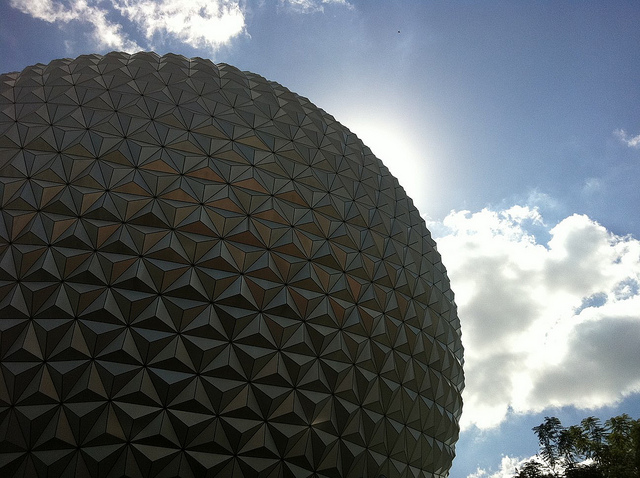
I traveled 1,300 miles by foot, car, subway, and two airplanes to watch a spaceship blast off into space. Was it fun? Absolutely. But was my decision to spend time, money, and resources to watch a machine carry humans into space really just another small vote for poverty?
A child is painfully aware, if only subconsciously, that it knows very little. The young brain does not see the world and say, "I know everything; I don't need to learn that." It doesn't make assumptions. A young brain is infinitely curious. Always exploring, always learning, always expanding its horizons and converting the unknown into something that makes sense.
Scientists call this brain plasticity, our brains' ability to evolve, change, and grow based on the experiences and the environments we're exposed to. As we age, our brain becomes less plastic and begins to harden as we convince ourselves that we know. We know how language works. We know how people work. We know how the world works.
But when we expose our brain to something new -- a different set of people, an awkward social situation, a reality that was previously deemed science fiction -- our brain is forced to cope with this new truth. It's forced to grow. It's forced to return to its plasticity and expand. Continue reading
Love and Purpose
What's the ultimate purpose of life? When you strip away everything, what's left?
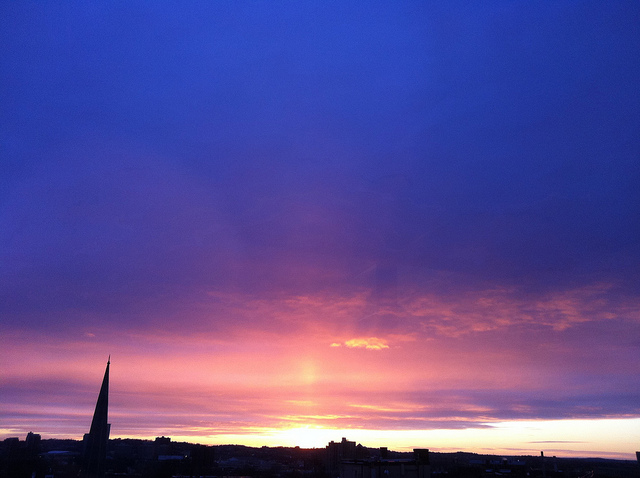
I looked up from my laptop and stared out the window to watch the final five minutes of the sun set over the city of Boston. As often happens, questions began popping into my head. What did it all mean? The sun, the Earth, the beautiful colors in the sky. What was the point of all this?
There has always been a piece of me that felt my purpose for being here on Earth was not going to involve starting a family, but suddenly I found myself wondering if that was really the case. I started imagining what it would be like to get married and have kids.
Was my stubborn persistence and vow to always follow my heart causing me to miss out on something really important? Was starting a family part of the purpose for existence? Will my life have been worth living if I don't make procreation a priority?
After the last sliver of orange disappeared over the horizon, I returned to my laptop and posed the question on Twitter and Facebook: What's the ultimate purpose of life? Continue reading
Envisioning the Future

When Martin Luther King, Jr. envisioned a future America where the color of his skin didn't determine his rights as a citizen and as a human being, he couldn't see the path between that point in history and the election of a black president. But did that stop him?
When Mahatma Gandhi envisioned a future where India was free and independent, he couldn't see the path between that point in history and a free country with the largest democracy in the world. But did that stop him?
When Nelson Mandela envisioned a future South Africa with a multi-racial democracy, he couldn't see the path between the 27 years he spent in prison and the day he became elected president of that country. But did that stop him? Continue reading
A Vision for Life on Earth
I have a vision for a world where everyone is healthy and educated. A curious world of independent, open-minded, knowledge-seeking individuals who always strive to improve the world around them. A world where no one is bored, stressed, or unhappy. A world where people are compassionate to all life and sensitive to Mother Nature.
A sustainable world where people embrace simplicity and recognize that physical things can only bring temporary happiness and unnecessary waste. A world where people explore the inner wonders of their own being and see it as the real final frontier.
A world where entertainment and joy come from spending time with loved ones; where improving ourselves physically, mentally, and spiritually is a never-ending, lifelong endeavor; and where everyone realizes that happiness comes from within and not from an external source. Continue reading
The Calm Before the Storm
I’ve noticed a pattern with my blog posting frequency: Whenever my daily life is going through a period of change, or when my short-term vision (1-6 months) is suddenly unclear, I tend to retract from expressing anything whatsoever; I retreat into the safety of my own brain until my short-term future is a little more clear. During that time, my posting frequency dries up and I have trouble organizing enough thoughts to write a single post. I'm beginning to realize that an unclear short-term vision creates an instantaneous writers block for me.
Everyone’s daily life changes from time to time, but the “period of change” I’m referring to affects more than just my personal life and short-term goals. Many other things are simultaneously changing: new blogs, new business ventures, new exercise routines, and even new writing environments and bank accounts. Some of my short-term goals are being completed (skydiving, scuba diving) and energy is being refocused to remaining goals (speed-reading, learning the piano). At the same time, the goals of existing projects (such as this blog) are are being redefined. I feel as though I’m revving up for all these changes and there’s one giant switch that’s about to flip.
But don’t get me wrong. I’m not trying to say that I dislike change or that I wish my “plans” weren’t disrupted. Quite to the contrary, I enjoy life throwing me surprises and reminding me that any plan, no matter how perfect, is destined for change. Expecting a plan not to change is guaranteeing myself disappointment. The only things I try to expect are this very moment, the lessons the past has to teach me, and the unpredictable potential the future holds. I’m constantly attempting to harness the power of the moment to augment the future while simultaneously searching for balance in life.